Monday, 1 August 2022

Step-by-step guide on creating Web 2.0 backlinks for SEO

Web 2.0 is a valuable digital asset that helps to improve search engine optimization. They are good for SEOs since they diversify the backlink profile of any website. Therefore, developers use high-quality Web 2.0 backlinks on low-competition keywords to improve search engine rankings. Thus, they are the most cost-effective backlinks. In short, Web 2.0 websites allow users to create, collaborate, share and communicate work with the rest of the world without needing web design skills.

Before getting into the ways to create Web 2.0 backlinks for SEO, it is essential to understand the concept of the same.

Backlinks for SEO

What is Web 2.0 backlinks for SEO?

Web 2.0 determines the present state of the internet with higher user-generated content than its last version, Web 1.0. The advanced application has created a business revolution in this digital era. Therefore, Web 2.0 is a backlink from social media platforms, self-publishing sites, and other related websites that allow user-friendly content. These links are digital assets that help a user to sign up for the sites and help to build backlinks to optimize SEO.

So, the concept behind Web 2.0 is that it focuses on a quality web application, web architecture, and the social web. It determines a massive change in how developers design today's websites and used by users. However, there are no technical changes in this process. 


Now that Web 2.0 concept is clear, let us understand the step-by-step guide to create Web 2.0 backlinks for SEO.

Step-by-step guide on creating Web 2.0 backlinks for SEO

Here are steps that will help a user to create backlinks for SEO:

Step 1: Sign-up for a platform

The first and most essential step is to sign up for a valid platform. Here is a list of some of the most known sites to build backlinks:

  • WordPress

  • Blogger

  • Sites.Google.com

  • Tumblr

  • Wix.com

  • Yola

  • Live Journal

  • Weebly

Step 2: Choose a correct URL

As soon as one creates a new Web 2.0 website, it is listed on a sub-domain. After this, one has to provide a name for the website’s URL. It is the sub-domain part of this URL where one can insert a primary keyword. Additionally, one should vary the keywords in URLs when building more than one website for backlinks. Here is an example of insertion of a primary keyword:

(keyword.wordpress.com)

sportsman.weebly.com

goodfood.wordpress.com

Step 3: Create essential pages

It is an important aspect to know that every Web 2.0 website that online content writing agencies create should have four pages:

  • About us

  • Contact

  • Term of use

  • Privacy policy

These pages ensure authority and trust for the new website when viewed by users. Websites that don't have these necessary pages are given a red flag, meaning that their website is not trustworthy.

Image Source: https://www.linkfireseo.com/seo-marketplace/web-20-blog-backlinks/

Step 4: Build a blog

The next important step in building Web 2.0 backlinks for SEO is to build an appropriate blog. For the new Web 2.0 website, publishing 15-20 blog posts with unique content will be beneficial. This will help a site as Google will index it faster.

Step 5: Create a Web 2.0 backlink

After publishing several blog posts, it’s time to create a backlink. Developers suggest not to add a backlink immediately to any first blog post. This may affect the ranking in an algorithm. Hence, waiting for this site to get indexed in Google search and then backlinking is a good idea. This ensures it is a trustworthy website and URLs are crawled for all end-users to view.

However, developers do not suggest creating a web 2.0 backlink on a website that is not indexed in SERP. So, patience is the only wise idea. 

To improve SEO, one should:

  1. Provide a proper anchor text ratio to avoid over-optimization of a backlink profile.

  2. One has to ensure that it is a link that passes PageRank value easily.

  3. Adding 3-5 links internally to a web page alongside the backlink will improve the internal Page Rank authority.

Image Source: https://monitorbacklinks.com/blog/seo/build-backlinks-website-2014

Step 6: Publish new content regularly.

Web 2.0 will close new accounts if one doesn’t publish content regularly there. The sites will deactivate all new accounts, and hence there will be a loss of backlink. Additionally, creating new content and publishing them regularly will increase and improve the strength of the new website attracting a lot of organic traffic. One should create more internal links to content to increase the PageRank authority.

However, a website with inappropriate content and fewer pages are considered spam. Google algorithm may discontinue such pages, and this might cause a penalty. A good idea to keep an account active is to schedule 1-2 new monthly articles to be published. Publishing 1-2 blog posts weekly will effectively generate more page ranking.

Step 7: Share content for more links

After completion of creating the new Web 2.0 site, it is essential to build dofollow links. Then, share the content from these websites, which will further generate quality links. It takes a lot of time to build a good Web 2.0 site. Hence, sharing these articles and content will increase organic traffic and help create backlinks.

Social media can be a key source here. Sharing this content on social media will enhance the site’s ranking. 

Image Source: https://backlinko.com/hub/seo/backlinks

How many backlinks should be built?

One should build approximately 6-10 Web 2.0 backlinks for SEO. These backlinks should be only a smaller section of one’s backlink profile. However, people often question if the backlinks are good for SEO. Well, Web 2.0 backlinks help diversify a backlink profile of any website, so it is good for SEO. 

Allowing Web 2.0 sites to be a part of SEO link-building plans is actually beneficial for new websites which do not have the ability to acquire top-quality links. 

What are the advantages of Web 2.0 backlinks?

Web 2.0 backlinks for SEO come with a lot of advantages and are hence people use them widely:

  • Cost-effective: It is absolutely free to make Web 2.0 and hence is budget-friendly. For example, creating a blog on Tumblr doesn’t require spending money. But one gets authority posts as Tumblr is the host.

  • Multiple links: With Web 2.0, linking to a website several times across various authority sites generates greater traffic. Additionally, one can also link to it on the same site but in a different content piece.

  • Safety: The link-building process is safe and follows Google's terms and conditions. This means there is no penalty while building links.

Final words

To summarize Web 2.0 backlinks for SEO is an easy procedure. Keeping in mind all these steps will help one to create powerful backlinks for a website. According to developers, the usage of Web 2.0 technologies will help in greater project participation and sharing of ideas. This will enhance production and strengthen the client-customer bond, improving communication in business.

However, success in the process with these links can only be possible when these properties are made valuable digital assets to ensure PageRank value. Additionally, one must put a lot of effort and time into building Web 2.0 sites to ensure a powerful backlink for a website.


Tuesday, 19 July 2022

The Google Algorithm Ranking Factors for 2023

Search Engine Optimisation is constantly evolving. Similarly, Google is regularly making changes in the algorithms that decide where, when and how to show a link along with the aim to provide the most relevant information. 

Listed below are some of the major Google search ranking factors that help every page rank at the top of the search engine result page. Some ranking factors mentioned below are proven, while others do not have any basis to prove them right. 

Google Content Ranking Factors

As we are trying to look into the future of SEO in 2023. In no specific order, the factors for ranking on the top of the Google Search engine result page are:

1. High-Quality Content

Content has always been the king and will remain so in the future. It is the most crucial factor for ranking a website. The quality of the content must be up to the mark to make it rank on the SERP. Your content must focus on providing valuable information. Website content writing quality is high when it is not thin on quantity, provides helpful information that helps the user and lowers bounce rate. 

The content will be considered high-quality when the following things are taken into consideration:

  • RankBrain- This machine learning system helps Google understand the intent of any search query. Thus, meeting the search intent is a must for becoming high-quality content.

  • Keyword use- Using keywords in content remains one of the most important aspects of good quality content.

  • Freshness- Keeping the freshness of any content is also an important factor. For evergreen content, changing the dates would not do. The matter inside requires checking to find what needs updation.

2. Keywords in Meta title tag

Adding the keywords targeted by the page into the meta title is an essential factor for ranking. However, the keywords' placement and concentration must be done with care. Ideally, the target keyword must be added only once to the title tag. Additionally, adding adjectives and articles around the keyword is equally important for better readability. 

3. Keywords in URL, header tags and meta description

Adding the target keywords into the slug of the URL, H1, H2, H3 tags and meta description has been considered a great practice for making a difference in the page's ranking ability. However, overdoing this would certainly not be good for the page and might have negative implications. 

4. Mobile first indexing

This usually happens if you have a separate mobile website. Google indexes the URL of your mobile site instead of the desktop version. To make it clear, there is no separate mobile indexing done here. Google indexes and ranks the content in the mobile version of your website. However, a responsive website is what Google recommends for a mobile website.

5. Page Speed

The slower your website loads, the more visitors you lose. Compressing and optimising images, caching the web pages, reducing redirects, shortening JavaScript, CSS and HTML codes are some techniques that can improve page speed. Tools like PageSpeed Insights can be useful in analysing the issues that affect your page speed.

6. User Experience

Image Source: https://www.searchenginejournal.com/ranking-factors/top-ranking-factors/#close
User experience (UX) has a considerable impact on SEO. If the content and layout are unattractive, people tend to lower their engagement with the website. With the help of well-written content and proper implementation of call-to-action buttons, the user experience can be enhanced. The user experience must pair well with the SEO to improve your position in the SERP. 
If a site has a good site architecture, users can find what they want with better navigation of the website. The website must be very easy to use. 

7. On-Page Optimisation

Image Source: https://www.searchenginejournal.com/ranking-factors/top-ranking-factors/#close
This ranking factor is quite similar to User Experience. It impacts your website's visibility and SERP ranking for the target keyword in website content writing . Writing the best title and description, using schema markup, writing the content based on the search intent so that Google picks up a featured snippet from your page and optimising Google discover are some ways your on-page content can be optimised.

8. Internal link and Backlinks
This is about linking to other pages of your website in a user-centric manner. Based on this, the other pages of your website gain traffic. While conversion happens and a user is signing up for a newsletter and requesting a demo, internal linking plays an essential part. 
Backlinks also play a crucial role when earned from a more powerful site than yours. The link-building strategy must be full proof so that it guides you to gain a better ranking on the SERP. However, the linking must be relevant to get better results.

9. Site Securing with SSL Certification

Image Source: https://www.searchenginejournal.com/ranking-factors/top-ranking-factors/#close
A Secure Sockets Layer or SSL certificate is one of the most basic ranking factors these days. Hackers are becoming classier as the web is becoming more of a necessity in our lives. It would certainly be a nightmare for Google to serve sites that are harmful to the users. 
If your website tends to get hacked, like if your website does not own an SSL certificate. Then you are bound to lose your ranking ability. SSL certificates can be obtained free of cost by simply registering.

10. Schema Markup/Structured Data

Image Source: https://www.searchenginejournal.com/ranking-factors/top-ranking-factors/#close
Schema markup is a code that needs incorporation into the website to help Google display more visual results like snippets. The sites that highlight an important piece of information, list the main pages of their website or contain a list of events are the ones that use schema markup. 
Google usually favours those pages incorporating schema markup as it helps make the information on the page more useful for the searchers. It also helps the information present on the page be more visually appealing in comparison to the other result pages.
This makes us end the list of some of the essential Google ranking factors. These factors require attention from the website owners if they want to get a better rank in the SERP. However, overdoing any of them will not improve your ranking but make it worse. With this help, Google has certainly improved the search experience. 
Every marketer must develop proper strategies to guide them in their SEO efforts using article writing services . Each page of your website must target different keywords. Each content must be treated in a way that best serves the target audience. If these are done, you will be able to earn links organically, engage users better and gain a better rank on Google's Search Engine Result Page.

Friday, 13 August 2021

What is Business Intelligence and How does it Work?

Have you ever wondered how all those big conglomerates and multinational companies keep track of their innumerable data?

In today's day and age, it is done through a process called "business intelligence".

Now you must be wondering what that means? How does it work? Is it of any help to the organization? Well, this article comprises of answers to all these questions. Follow along to get a clear idea of what business intelligence is and how it works for the betterment of a company.


What is business intelligence?


Let's first get an idea of what this term actually means. In simple terms, business intelligence is defined as several processes to extract data and convert those to provide useful information. This information can be used to build strategies and make up business tactics that would be fruitful. 

Business intelligence software's use tools to collect raw, past data of a company. These tools then analyze the collected data and produce results. The results come in the form of detailed summaries, bar graphs, pie charts etc., which tells everything about a particular organization. These results also influence the company's strategies, inefficiencies, and approach to carry on its business successfully.


Significance:


Now that you know what business intelligence can do let us look at the importance of the process. Business intelligence comes with the following set of significance-


  • It helps in determining the latest trends running in the market.

  • The tools also help identify errors in the business, making it easier for analysts to spot and rectify them.

  • All data are produced in visual formats. This helps for a better understanding of the information.

  • The process also compares current data with past ones. This helps in tracking performance developments.


Advantages:


Making use of business intelligence has several advantages attached to it. Some of them are-


  • It provides an outlook of a particular organization as a whole.

  • The process helps in improving the productivity of a company by producing visual results and analytics in an instant.

  • It simplifies each and every complicated procedure involved in a business by generating analyzed reports, dashboards, and performance charts.

  • The presence of a user-friendly interface makes it even more acceptable to companies and analyzers in understanding and implementing strategies.


Strategy:


The essential aspect of using business intelligence is to have a clear vision of the strategies. Determining the business strategy helps in many ways- from surviving in the competitive market to planning the future prospects.

A business intelligence strategy can be referred to as a guide. A guide which shows businesses, their accomplishments and helps to figure out advantages amidst competition by using data and statistics.


There exist two kinds of business intelligence-


  • Traditional- This kind produces results by making use of all the inside transactions of a company. Traditional business intelligence is very much strict in terms of accuracy and credibility. So, analysts use this method while generating financial reports and cash flows of a company- where accuracy and reliability are a compulsion.


  • Modern- This method is used to determine the ever-changing marketing dynamics. Analysis of these does not require fully correct data but pace. The faster an analyst changes strategies with current trends; the more will a company develop and grow.


Business intelligence tools have also become more accurate in predictive analysis and user-friendly with the changing times. This has enabled more users to adopt such techniques for their companies.

But, you should also keep a fact in mind. No matter what kind of business intelligence strategies these tools provide, all goes in vain if they are not addressed or implemented properly!


Know the difference:


You might have heard about the term "business analytics". And after reading about business intelligence, you might as well start thinking that both these terms are the same. Here's where you go wrong!

Business intelligence and business analytics are two very different things, even though they both are equally useful and important for a company.

Business intelligence is all about the present state of condition of a company. These tools derive information from an organization's past data and statistics and help determine where the company stands today.

On the other hand, business analytics provides you with predictive outcomes. By predictive, it means as to where will the company lie in the near future. Analytics also makes use of the same data but produces future outcomes for a particular organization. Moreover, business analytics also helps in offering solutions that could help you to yield better results ahead.

Both of these aspects also require a different set of skills if you want to utilize them to the fullest. Business intelligence, which involves easy-to-use tools, is of use to the manager to see a company's present state. Whereas business analytics, affecting predictive outcomes, requires professional data-science analysts to successfully decipher and implement the data for a company's future prospects.


Business intelligence tools and software:


Let us now have a look at the tools involved in the business intelligence process-


  • Reports: It collects all the company's past data and analyses them to produce a comprehensive review.

  • Data warehousing: This tool is like a storehouse, where all the data collected by the software is accumulated.

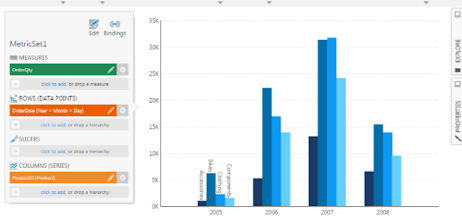
  • Dashboard: A tool that offers a graphical representation of the statistics.

  • Data visualization: This tool makes use of bar graphs, pie charts, maps etc., to create a visually enticing effect of all the data procured. This is an essential thing, as it makes the data easier to understand.


Screenshot (30).png


Following are some popular business intelligence software-


  • Oracle.

  • SAS Viya.

  • Geckoboard.

  • Domo.

  • Tableau.

  • Sisense.

  • Dundas.

  • SAP Business Objects.


Therefore, business intelligence is a very broad and detailed process. Alongside making data collection and analysis easy and fast, it also helps you think of future strategies for developing a business. So proper implementation and execution is also necessary to mark its full potential. We are the best content writing services provider in India.